A Writer's Theory of Addictive Storytelling
The Six Principles for TikTok Hooks, Micro-Dramas, and Feature Films
By Matt Dean
A Writer's Theory of Everything: the one element that decides whether an audience waits to see what happens next or scrolls on. From three-second videos to micro-dramas and feature films.
*No AI was used to write the book. I did however use spell check so hopefully most of it's correct.
A New Medium for a New Generation
Slop is the term given to much of the content being generated in the age of AI. Images, video, stories, apps; with a simple prompt, AI has given everyone the ability to "create" and in doing so, our art has become meaningless content. But slop is not new to art or in particular, storytelling. We've all flipped past videos online that didn't interest us or left movie theaters partway through a horribly written film or set aside a book when the writing was bad.
So what makes us want to stop and watch one story and scroll past another?
What does a TikTok video of a man slipping on the ice or a cat and dog slapping each other in the face have in common with a fictional story of a man and a woman falling in love in a bookstore in downtown New York?
And how do we bring meaning back to an ever growing library of forgettable content that can be generated in just minutes by AI where it used to take us a lifetime to master?
I'm about to show you how to improve your writing for addictive content. While I'm going to focus on short-form storytelling, the basics can be used in everything from three-second TikTok videos to three-hour feature films and will include story fundamentals that I think have been missing from all aspects of our current media.
The format of vertical and short-form content has given us a new opportunity to examine addictive storytelling. We can watch for hours as animal videos, magicians, dance videos, how-to videos, and millions of others fly past our eyes and keep us locked in place. But what is the common element of all of the addictive videos compared to those we swipe past? And how can we recreate this in a script?
The first section of this book examines samples from short-form videos to see what separates addictive and sharable content from those that are not. In Part Two, I then take those concepts and translate them to scripts for Micro-dramas and feature films.
The following book contains references to books I've learned from like "The Writers Journey" by Christopher Vogler which is based in Joseph Campbell's mythology work in "Hero with a Thousand Faces", Carl Jung's "The Archetypes and the Collective Unconscious", "Save the Cat" by Blake Snyder, "Story" by Robert McKee, and Stephen King's "On Writing". These years of study, as well as my many years of producing, writing and editing have shown me first hand what storytelling techniques work and what do not work.
Over the course of my career I've worked on over 100 feature films, micro-dramas, video games, commercials and TV shows. I have millions of views on my films and YouTube videos. I've had to rework films and TV shows in the edit suite where elements like character motivations were missing, actions had no consequences, and basic plots led nowhere. Worse than that, many of the stories I was trying to fix were boring. They said nothing of importance, and they felt like they were just taking up space that would have been better spent taking a walk through a garden.
I'd love to end the suffering of bad stories poorly told. With a little bit of understanding of why stories can be addictive, I think we can do that.
A Writer's Theory of Everything
Most people get this wrong. If you ask "experts" how to write a viral or addictive story, people will say "write for the algorithm" or "be engaging", "create tension" or "you need a hook". But what do any of those things mean when you're trying to break your idea down to the most basic elements and recreate them over and over?
You can't write an outline or repeatable formula around nebulous terms like "hook" or advice like "Write for the algorithm", and that's what we're going to do here. We're going to discover what I consider to be the "Theory of Everything" for storytelling. After you read this, you'll have a set of guidelines that you can use to make any of your stories better. But there's one more thing you'll need to add into it that is not in this book.
YOU. Your experience, your adventures, your loves and losses. In an age of AI which will undoubtedly try to copy and integrate this material, the one thing AI can't compete with is your own personal experiences.
Whether you're performing magic tricks, giving science lectures, short documentaries, micro-dramas or feature films, all of this content, stories and demonstrations can be broken down into a very simple set of ideas that will make your story more addictive, but the added magic of all storytelling is the narrator's personal voice.
We watch stories for entertainment, but also as a way to see how other people will respond to difficult situations.
We want to see examples of love, leadership, danger, intelligence, philosophy, exotic places, internal workings of jobs we'll never have, lives we'll never live and hope we have for our own future.
The writer and creator's job is to transport people into the world we imagine. Whether it's three-seconds of skating tricks to three-hours on an IMAX screen, the job is the same, and frankly, the approach can also be the same.
In science, Einstein was obsessed with finding a "Theory of Everything" in which he hoped to unify every area of science. Something that unified gravity and magnetism and all of physics into one small, elegant equation. This "Theory of Everything" is what I believe we have here.
In writing, the hook, the plot, the characters are all the molecular level of a story on which much can be built and detailed, but what is the most basic element of all?
I discovered this when breaking down three-second TikTok videos which were able to grab my attention and hold it through their conclusion. If this one thing is true for three-second videos, could it also be true for three-hour feature films?
In a word, yes. This one thing can grab and hold the attention of the audience in any medium, any genre. This one idea explains why some stories grab and hold your attention and why others do not.
It sounds simple when you first hear it, so let it sit with you for a moment.
The key element that storytelling is built on is: Anticipation of Outcome.
Every viral video, every story that holds your attention does this ONE thing and depending on how strong it is will determine how long you will wait to see what is going to happen or scroll on to something else. ALL other elements of an addictive story are built from this.
Without it, no character development, plot or outcome will matter, regardless of spectacle or how much money you put into advertising.
What does anticipation mean? We could also use the word prediction, but anticipation means more than prediction. Anticipation is the ability of an audience to guess at what is coming next, then take emotional action to prepare for it. Anticipation engages the audience deeper than mere prediction. Think about a horror movie when the tension builds and you sink lower into your seat, or a tearful romantic moment happens and you have to grab for a box of tissues.
We do this every day as we experience things around us like; witness a bad driver as we head out to our favorite restaurant. As we watch someone swerving in and out of traffic behind us, we watch closely to guess where they will go next so we can stay out of their way. We are anticipating the outcome. If we stay ahead of them, then we can keep ourselves and our loved ones riding with us safe.
One of the reasons we watch stories is so we can activate our anticipation and practice how we should act in any given situation. How should we act or talk on a date? What should we do to stay out of a fight? If we run across a similar obstacle, what action will get us around it? Everything we do is based in anticipation, so if our stories will engage our primal anticipation, then we will watch.
Let's look at this another way.
What is one of the most popular forms of entertainment today? There was 64 Billion dollars spent on this in 2025 and it jumped to 240 Billion in 2026.
Prediction markets. The ability to spend money on guessing the outcome of any event in the world. Politics, games, news events, anything and everything was there so that people could take their shot at predicting outcomes.
Where money is spent in prediction markets, time and emotional energy are spent on content and stories. It's the exact same hit, dopamine rush, moment of satisfaction. Time and emotional energy are spent for the chance to anticipate and emotionally react to the outcome of the story. Will she sleep with Chad or with Monte? Who is the murder? How will they overcome this insurmountable obstacle or defeat this powerful villain? If done correctly, you will feel at one with the characters in the story as if everything is happening to you and not just to them.
"All good books are alike in that they are truer than if they had really happened and after you are finished reading one you will feel that all that happened to you and afterwards it all belongs to you;"By-Line: Ernest Hemingway p.184
Prediction. Anticipation. Outcome. It's all the same. It's all at the core of addictive storytelling.
Let's look at another example and see if it fits this idea of anticipation being the Theory of Everything for addictive writing.
Some people might argue with me and say that conflict or movement or hooks are more important. But let's test that.
Can you think of a story that people enjoy that is void of conflict, void of action, void of anything other than anticipation?
The one that comes to my mind is "Waiting for Godot". Two men, having a conversation waiting for a friend who never arrives. The entire story is built on anticipation that at some point Godot will arrive. But he never does. Nothing happens. Nothing but anticipation.
This story is part of the theater of the absurd and it is an extreme example. For addictive stories, we need something more. But to me, stories like this help prove the point that the central idea of stories, especially addictive stories, is anticipation of outcome.
Before we talk about all the other story elements you are thinking of (Conflict, plot, character development, resolution) let's break down a simple short-form video so you can see why this is the foundational element that everything else is built on.
Let's take it from a TikTok or YouTube style video.
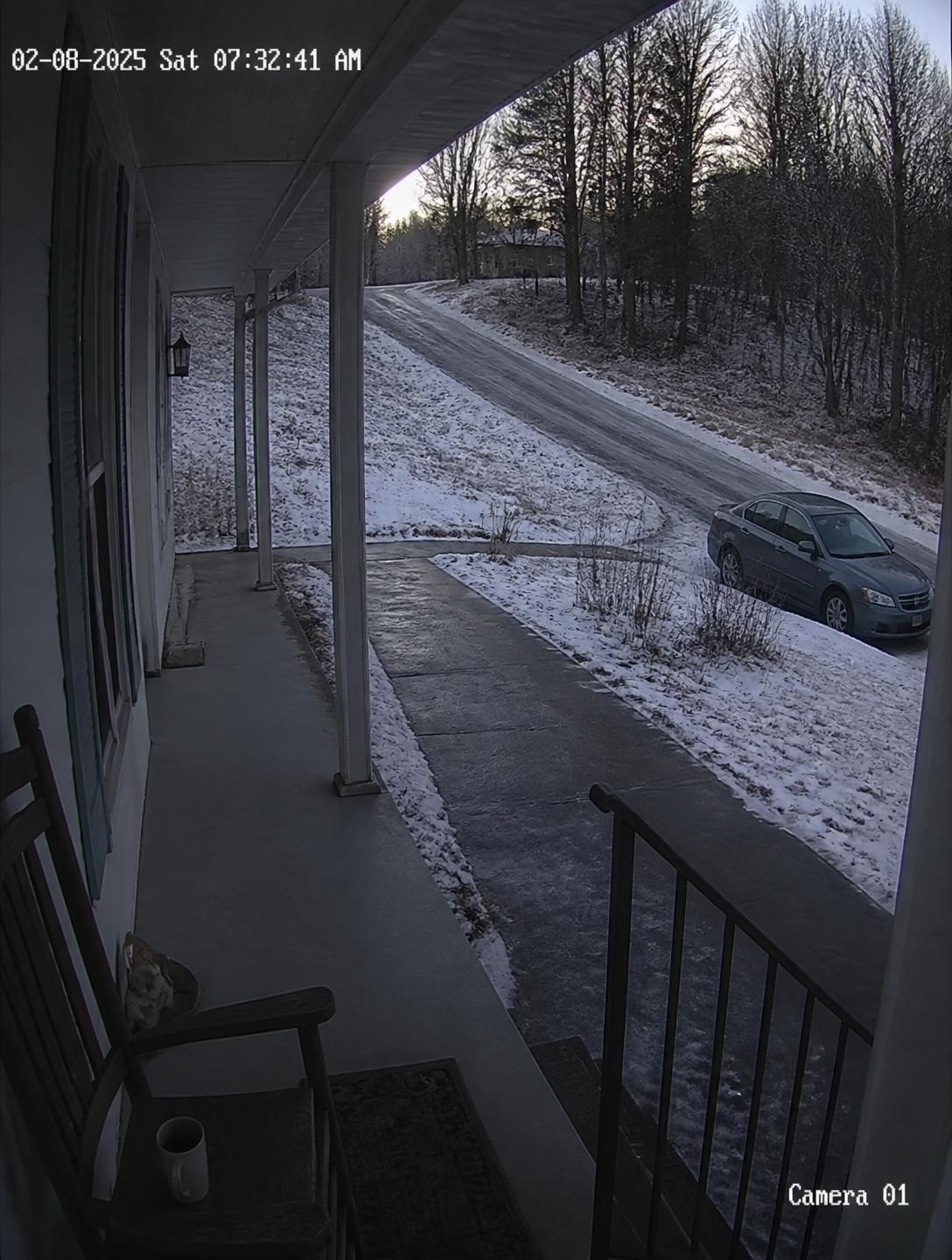
It's winter time, and in front of the porch is a sidewalk, a sloping driveway, and a parked car. A man walks out the door with a cup of coffee in his hand.
We instantly feel anxiety for the man. We recognize the potential conflict for the man, the ice and a waiting sidewalk. We also know that someone would not have uploaded it without SOMETHING about to happen.
This begins our anticipation of outcome. We have seen this sort of thing before, or we have been in this exact situation ourselves and in our gut we suddenly become anxious as we calculate the potential disaster that awaits the man.
Will he slip and hurt himself? Will he make it to the car with his coffee intact? Will he be able to skate the ice with superhuman ability only to be undone by a dog running to see him or a wife that comes out the door after him and also slips?
In a matter of a split second we imagine dozens of scenarios, and as the man steps out...
What happens?
You want to know.
I want to know.
The longer we hold on this moment, the more we want to know, and the more our anxiety builds.
Then..
The ice on the sidewalk causes him to slip. He tries to catch himself but loses the coffee and hits the ground hard. One beat later, his wife runs out the door to help him, and she falls on the ice as well. Together, they lay on the ground groaning.
We laugh, we grimace, we watch it again.
This type of "Fails" videos are all over TikTok and YouTube. It's a great example of the type of videos that people share regularly.
Anticipation is what this is built on. Outcome is what we are wanting to see. The distance between what you anticipated happening and what actually happens, can be the difference between a viral video and one that goes nowhere.
So how do you break this down so that you can use this in a script? And what are all the other elements that go into it to draw out that anticipation and create a story that we care about over the length of a micro-drama for a full feature film?
Addictive Story Lab
What TikTok or YouTube videos have you watched recently that you feel best utilize anticipation of outcome?
What other technologies or art forms use prediction or anticipation as entertainment?
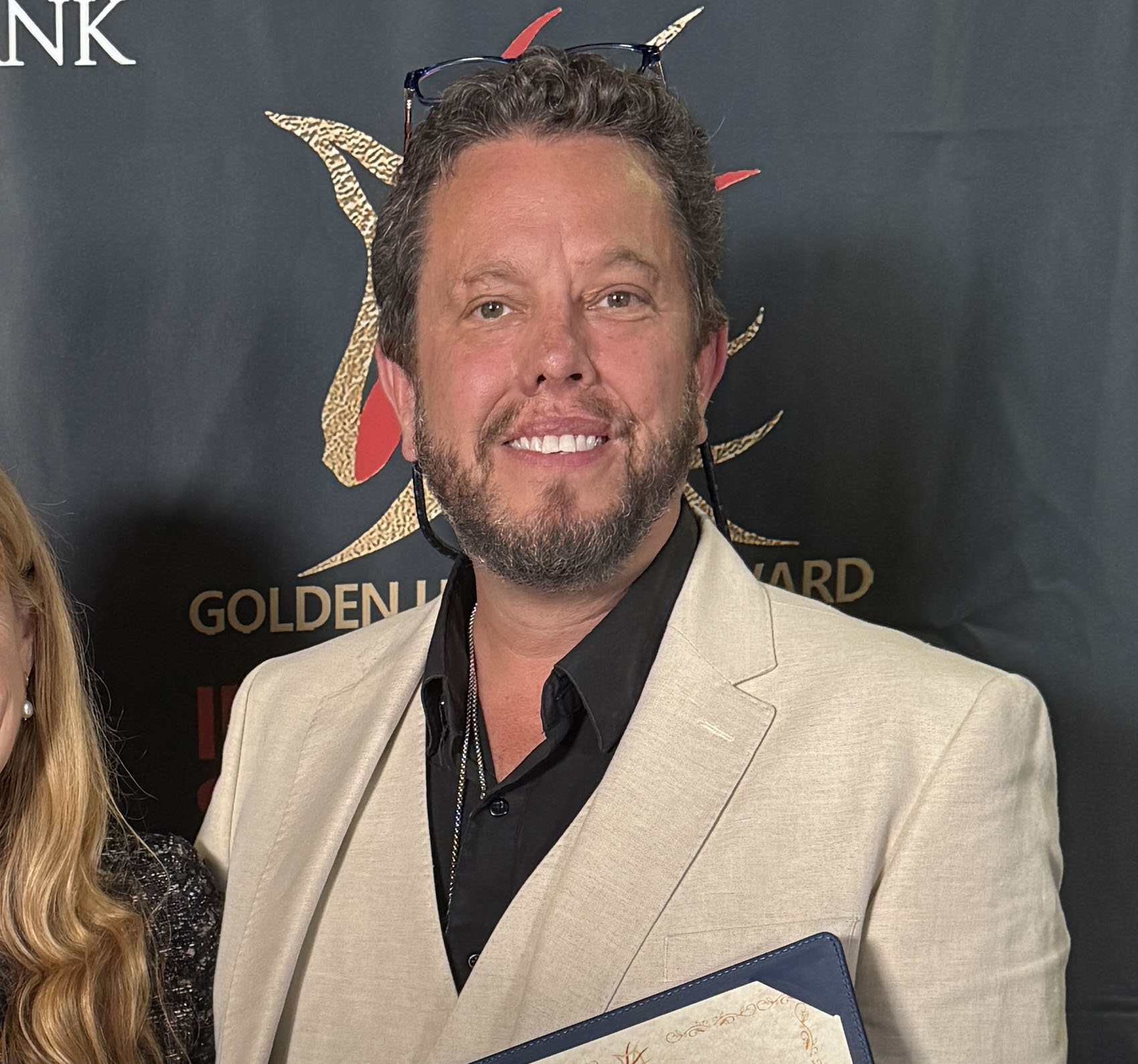
Matt Dean
Matt Dean is the CEO of Cliffhanger TV and author of several books on production and writing addictive shortform content. He has worked in film and TV for over 35 years with experience on over 100 Feature Films, TV shows and Micro-dramas and hundreds of commercials, trailers and promotions. He's won awards for numerous documentaries, advertising, and Micro-dramas and produced several hit vertical series.